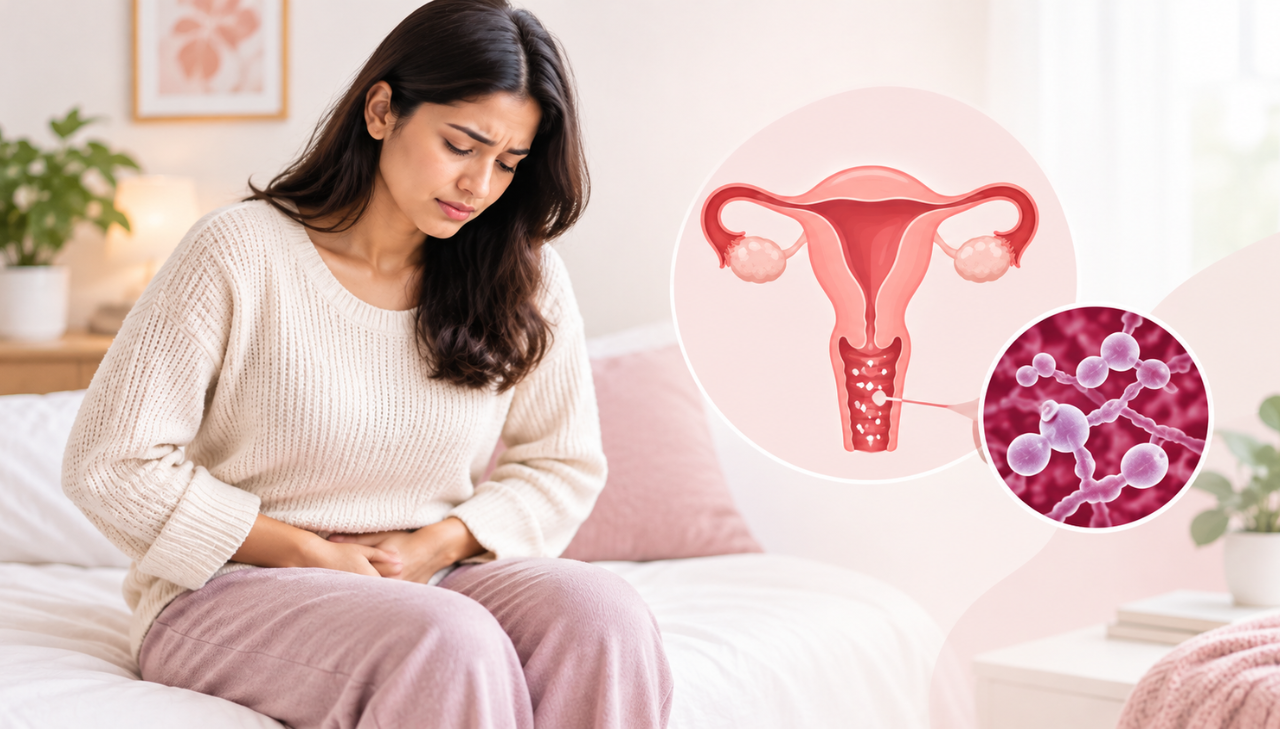
What Is a Vaginal Yeast Infection? Causes, Symptoms & Treatment
Vaginal yeast infections are a common cause of vaginal itching, irritation, unusual discharge, and discomfort. They occur when a type of fungus called Candida grows excessively in the vagina. Although vaginal yeast infections are usually treatable, their symptoms can sometimes be similar to other vaginal infections, making an accurate diagnosis important.
Understanding the causes, symptoms, and treatment options can help women recognise when they may need medical advice. If you experience persistent or recurring vaginal symptoms, consulting a qualified gynecologist can help identify the underlying cause and guide appropriate treatment.
What Is a Vaginal Yeast Infection?
A vaginal yeast infection, also known as vulvovaginal candidiasis, is caused by an overgrowth of Candida yeast in the vagina. Candida albicans is the most common type responsible for these infections, although other Candida species can also cause them.
A yeast infection is not usually considered a sexually transmitted infection. It can occur in women who have never been sexually active as well.
While vaginal yeast infections are generally not serious, they can cause significant itching, soreness, and irritation. Repeated or persistent infections may require further evaluation to determine whether an underlying factor is contributing to the problem.
What Causes Vaginal Yeast Infections?
Candida can normally be present in the vagina without causing symptoms. An infection may develop when the natural balance of microorganisms changes and Candida grows excessively.
Some factors associated with an increased risk of vaginal yeast infections include:
Recent or frequent use of antibiotics
Poorly controlled diabetes
Conditions or medicines that weaken the immune system
Hormonal changes
Previous episodes of vaginal yeast infection
Certain medications or other factors that affect the normal vaginal environment
However, many women with an uncomplicated yeast infection do not have an identifiable trigger.
Maintaining appropriate intimate hygiene is important, but excessive washing, vaginal douching, or using fragranced products can also cause irritation and disturb the vaginal environment.
Common Symptoms of a Vaginal Yeast Infection
Symptoms can vary from woman to woman. Common symptoms include:
Intense itching around the vagina or vulva
Vaginal soreness or irritation
Redness or swelling
Thick, white vaginal discharge that may have a cottage-cheese-like appearance
Burning or discomfort while urinating
Pain or discomfort during sexual intercourse
Some women may experience more severe redness, swelling, cracks, or irritation.
It is important to remember that these symptoms are not specific to yeast infections. Bacterial vaginosis, certain sexually transmitted infections, allergic reactions, and other vaginal conditions can cause similar symptoms. Therefore, self-diagnosing based only on symptoms may sometimes lead to the wrong treatment.
How Is a Vaginal Yeast Infection Diagnosed?
A gynecologist may ask about your symptoms, medical history, previous infections, medications, and other relevant factors. A physical examination may also be recommended.
Depending on the symptoms and clinical findings, a sample of vaginal discharge may be examined under a microscope or sent for testing. Testing can help identify Candida and rule out other possible causes of vaginal discomfort.
This is particularly important when symptoms are severe, keep returning, or do not improve after treatment.
How Is a Vaginal Yeast Infection Treated?
Vaginal yeast infections are generally treated with antifungal medicines. Depending on the type and severity of infection, treatment may include an antifungal cream, vaginal medication, or an oral antifungal medicine.
For uncomplicated infections, commonly used antifungal treatments include medicines from the azole group. The specific medicine, dose, and duration should be selected based on the individual's symptoms and clinical situation.
Women who are pregnant, have diabetes, have a weakened immune system, or experience recurrent infections may require a different treatment approach and medical supervision.
If symptoms continue after treatment or return soon after treatment, it is advisable to consult a gynecologist rather than repeatedly using over-the-counter medicines. Persistent symptoms may have another cause or may involve a different type of Candida.
Can Vaginal Yeast Infections Be Prevented?
Not every yeast infection can be prevented, but some habits may help reduce irritation and maintain vaginal health:
Keep the genital area clean and dry.
Avoid vaginal douching and strongly fragranced intimate products.
Avoid unnecessary use of antibiotics.
Choose breathable underwear and avoid consistently wearing very tight clothing.
Change out of wet clothing as soon as possible.
Follow prescribed treatment as directed.
It is also important not to rely on home remedies or unproven treatments. The CDC notes that there is not substantial evidence supporting probiotics or homeopathic medicines as treatments for vulvovaginal candidiasis.
When Should You See a Gynecologist?
You should consider consulting a gynecologist if this is your first suspected yeast infection, your symptoms are severe, treatment does not work, or the infection keeps returning.
Recurrent vaginal yeast infections may require additional testing and a longer-term treatment plan. The CDC defines recurrent vulvovaginal candidiasis as three or more symptomatic episodes within one year.
If you are looking for a Best Gynecologist in South Delhi, it is important to choose a doctor who can assess your symptoms properly rather than treating every episode of vaginal irritation as a yeast infection.
Consult Dr. Yuvakshi Juneja for Women's Health Concerns
Dr. Yuvakshi Juneja provides gynecological care for women experiencing a range of reproductive and women's health concerns. If you are experiencing persistent vaginal itching, unusual discharge, irritation, or recurring infections, a consultation at a trusted Gynecology Clinic can help determine the cause and appropriate treatment.
As a Best Gynecologist in Delhi NCR, Dr. Yuvakshi Juneja focuses on personalised gynecological care based on each woman's symptoms and health needs. Whether you are experiencing a new vaginal concern or dealing with recurring symptoms, professional evaluation can help ensure that the underlying condition is identified and appropriately managed.
Conclusion
Vaginal yeast infections are common and usually treatable, but symptoms such as itching, discharge, burning, and soreness can have several possible causes. Getting the right diagnosis is therefore an important part of effective treatment.
If you are experiencing persistent or recurring vaginal symptoms, consulting an experienced gynecologist can help you understand the cause and receive appropriate care. Dr. Yuvakshi Juneja offers gynecological consultations for women seeking professional guidance for vaginal and reproductive health concerns.
Disclaimer: This content is for informational purposes only. Always consult a qualified medical practitioner for advice specific to your health.
FAQs
1. Can a vaginal yeast infection go away on its own?
Some mild symptoms may improve, but it is important not to assume that vaginal itching or discharge is caused by yeast. Similar symptoms can occur with other vaginal conditions. Proper evaluation can help determine the cause.
2. Is a vaginal yeast infection an STI?
No. Vaginal yeast infections are not generally classified as sexually transmitted infections. However, sexual activity can sometimes be associated with vaginal irritation, so persistent symptoms should be evaluated by a healthcare professional.
3. Can yeast infections keep coming back?
Yes. Some women experience recurrent vaginal yeast infections. Recurrent cases may require testing to identify the Candida species and an appropriate longer-term treatment plan.
4. When should I consult a gynecologist?
Consult a gynecologist if you have symptoms for the first time, symptoms are severe or persistent, treatment has not worked, or infections keep returning. Pregnant women and women with certain underlying health conditions should also seek medical advice before starting treatment.
5. Can I treat a yeast infection without seeing a doctor?
Some antifungal treatments are available without a prescription, but symptoms can overlap with other vaginal infections. If you are unsure about the cause, symptoms persist, or the infection keeps returning, medical evaluation is recommended.