Menstrual Cycle Phases: What Is Normal and What Is Not?
Ever notice your period isn't quite the same every month? Some months it's heavier, some lighter, sometimes it just arrives a few days off schedule. Understanding menstrual cycle phases is the easiest way to make sense of that, instead of second-guessing every change.
What Is a Menstrual Cycle?
Your cycle runs from the first day of one period to the first day of the next. It's basically your body's monthly routine of getting ready for a possible pregnancy, whether or not that's actually on your radar.
Most cycles land somewhere between 21 and 35 days. That's a big range, and it can shift from one month to the next; stress, bad sleep, illness, or a hormone dip can push things earlier or later. On its own, that's usually not something to worry about.
What Are the Four Phases of the Menstrual Cycle?
There are four phases, and estrogen and progesterone are what drive the whole thing. Here's what's actually happening in each one.
1. Menstrual Phase
This is your period, marking day one of your cycle. Your uterus sheds its lining (the endometrium) because pregnancy didn't happen. Bleeding usually runs three to seven days, heavier early and lighter as the week goes on. Cramps and low energy are common. Soaking a pad or tampon every hour, or bleeding past day seven, is worth mentioning to a gynecologist.
2. Follicular Phase
This overlaps with your period, starting on day one too. In your ovaries, small sacs called follicles begin growing, each holding an egg, while rising estrogen rebuilds the uterine lining. Many notice their energy and mood picking up here.
3. Ovulation Phase
This is when a mature egg is released, usually near the middle of your cycle — the exact day depends on cycle length. Some notice clear, stretchy discharge around this time, or a one-sided twinge near the pelvis known as ovulation pain. Neither is anything to worry about on its own.
Also Read: How to Know You’re Ovulating: Signs, Symptoms and Fertile Days
4. Luteal Phase
After the egg is released, the leftover follicle produces progesterone, keeping the uterine lining in place in case of pregnancy. If it doesn't happen, hormone levels drop again — usually behind the bloating, sore breasts, and irritability known as PMS. Then the cycle starts over.
What Is a Normal Menstrual Cycle?
Broadly, normal means somewhere between 21 and 35 days, with bleeding lasting three to seven days. But normal is also personal; if you've had a steady 26-day cycle for years, that's normal for you, even though it's on the shorter side.
The thing that actually matters is whether something has changed from your usual pattern, not whether you match some textbook number.
How to Track Your Menstrual Cycle
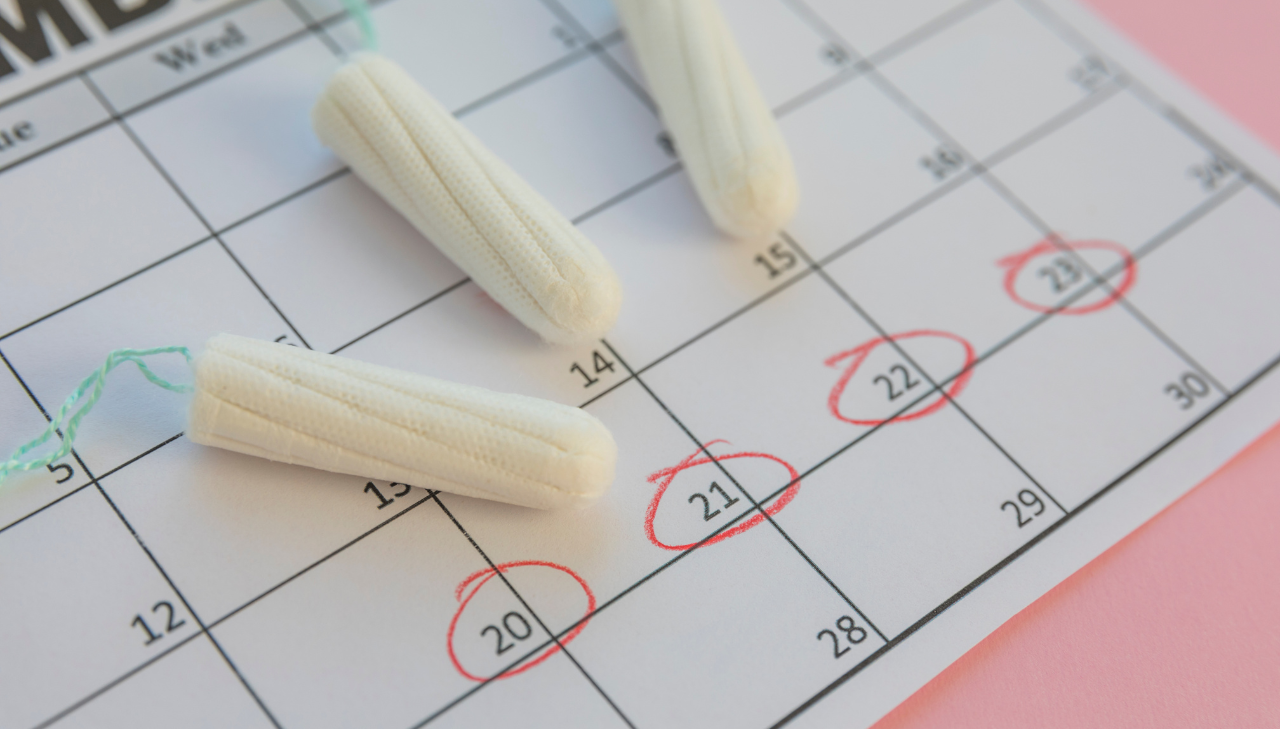
Tracking is honestly one of the easiest ways to get to know your own cycle, and it makes it much easier to catch when something's different. Things worth jotting down each month:
First and last day of bleeding
Days between periods
How heavy or light the flow is
Pain level
Any spotting between periods
Other symptoms, mood swings, headaches, whatever comes up
A notebook works just fine, or an app if you'd rather. Whatever you'll actually keep up with.
What Can Make Periods Irregular?
An off month here and there is common, and it rarely means anything. Stress, sudden weight changes, hormonal shifts, intense exercise, illness, certain medications, pregnancy, puberty, and perimenopause can all throw your cycle off.
One irregular cycle usually isn't a big deal. It's a pattern that keeps repeating that's worth paying attention to.
Irregular Periods Symptoms You Should Not Ignore
Some variation is normal, but a few irregular periods symptoms are worth a closer look:
Very heavy bleeding that soaks through protection within an hour
Periods running longer than seven days
Missed periods for several months, without pregnancy
Cycles shorter than 21 days or longer than 35
Bleeding or spotting between periods
Pain bad enough to disrupt your day
A sudden, unexplained shift from your usual pattern
Also Read: 10 Common Causes of Irregular Periods & How to Manage Them
When Should You See a Gynecologist?
You don't need to wait until it feels like an emergency. It's worth booking a visit if you notice repeated irregular bleeding, periods that suddenly get much heavier or more painful, bleeding between cycles, or missed periods with no obvious explanation like pregnancy.
Dr. Yuvakshi Juneja often points out that catching these symptoms early makes it a lot easier to figure out the cause and start the right treatment.
Final Thoughts
Every woman’s cycle can be a little different. Small changes are often normal, but ongoing changes in your periods, flow, or pain should not be ignored. If you are concerned, Dr. Yuvakshi Juneja, one of the Best Gynecologist in South Delhi, can help you understand your symptoms and guide you on the right care.
Medical Disclaimer: This blog is for general information only. It does not replace a medical checkup or personal medical advice. Speak with a qualified gynecologist for advice based on your health and fertility needs.
FAQs
1. What are the four phases of the menstrual cycle?
The menstrual cycle has four phases: menstrual, follicular, ovulation, and luteal. Each phase brings hormone changes that affect your period, ovulation, and preparation for pregnancy.
2. How long is a normal menstrual cycle?
A normal menstrual cycle usually lasts 21 to 35 days. Your cycle may be slightly shorter or longer, and small changes each month can be normal.
3. Is it normal for cycle length to change each month?
Yes, small changes in cycle length are common. Stress, illness, travel, weight changes, and daily habits can affect your periods. Ongoing changes should be checked.
4. How can I tell if my periods are irregular?
Your periods may be irregular when the time between them keeps changing, or your bleeding becomes unusually light, heavy, long, or different from your normal pattern.
5. When should I see a doctor about irregular periods?
Talk to a doctor if irregular periods continue for several months, bleeding is very heavy, pain becomes severe, or you miss periods without being pregnant.