Genital Warts in Women: Symptoms, Causes and Treatment
Noticing small bumps or unusual growths around your vaginal or genital area can naturally cause concern. You may wonder whether they are harmless skin changes, an infection, or something that requires medical attention.One possible cause of these growths is genital warts, a common sexually transmitted infection (STI) caused by certain types of the Human Papillomavirus (HPV).
Genital warts can appear around the vulva, vagina, cervix, anus, or nearby genital skin. Some women may experience itching, irritation, or discomfort, while others may not notice any symptoms.
The good news is that genital warts are treatable, and several medical options are available to manage them. Understanding their symptoms, causes, and treatment options can help you seek timely medical care without unnecessary worry.
What Are Genital Warts in Women?
Genital warts are small, non-cancerous growths that develop on or around the genital and anal areas due to infection with certain types of HPV.
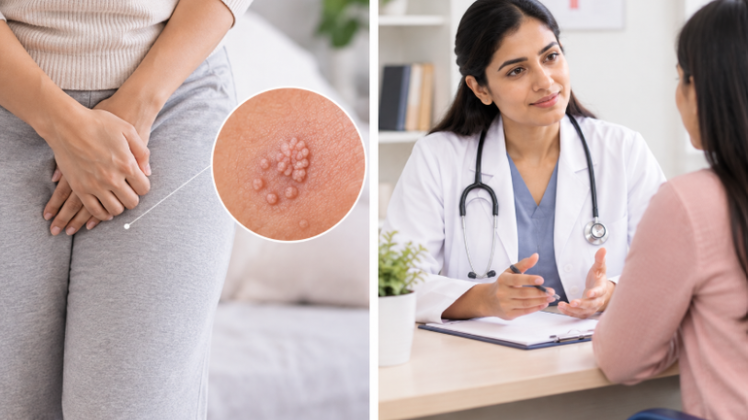
They may appear as individual bumps or clusters of growths. Some are flat and smooth, while others may have a raised or cauliflower-like appearance.
Genital warts are most commonly associated with HPV types 6 and 11, which are considered low-risk types because they are not usually associated with cancer.
It is important to understand that the HPV types responsible for most genital warts are different from the high-risk HPV types associated with cervical cancer.
Genital warts can sometimes disappear without treatment, remain unchanged, or increase in size and number. However, medical evaluation is important to confirm the diagnosis and determine whether treatment is needed.
What Do Genital Warts Look Like in Women?
The appearance of genital warts can vary depending on their location, size, and number.
Common characteristics include:
Small, flesh-coloured, pink, or slightly darker bumps.
Flat or raised growths around the genital area.
Single bumps or clusters of multiple growths.
Soft growths with a smooth or rough surface.
Cauliflower-like clusters in some cases.
Growths that may gradually increase in size or number.
In women, genital warts may develop in different areas, including:
Vulva (external female genital area).
Around the vaginal opening.
Inside the vagina.
On the cervix.
Around the anus or perineum.
Not every genital bump is a genital wart. Other conditions, including skin tags, molluscum contagiosum, and other skin or genital conditions, can sometimes look similar.
Therefore, avoid diagnosing yourself based only on appearance. A gynecological examination can help identify the actual cause.
Also Read: Early Signs of STDs in Women You Should Know
What Are the Common Symptoms of Genital Warts in Women?
Some women with genital warts do not experience noticeable symptoms. Others may develop visible growths or discomfort depending on the affected area.
Common symptoms include:
Small bumps or unusual growths around the vagina or vulva.
Multiple growths appearing in clusters.
Itching or irritation around the genital area.
Mild discomfort or soreness.
Burning or irritation in the affected area.
Bleeding from warts due to friction or contact.
Discomfort during sexual intercourse.
If warts develop inside the vagina or around the cervix, they may not be easily visible without a medical examination.
It is important to consult a gynecologist if you notice new or unusual genital growths, even if they are painless.
What Causes Genital Warts in Women?
The primary cause of genital warts is infection with certain strains of the Human Papillomavirus (HPV).
HPV is a common virus that can spread through intimate skin-to-skin contact. Not every HPV infection causes visible symptoms, and many infections are cleared naturally by the body's immune system.
Some common factors associated with HPV transmission include:
1. Sexual Skin-to-Skin Contact
HPV can spread through vaginal, anal, and oral sexual contact. It can also spread through intimate genital-to-genital skin contact without penetration.
A person may transmit HPV even when they do not have visible warts or other symptoms.
2. Unprotected Sexual Contact
Not using condoms may increase the risk of HPV transmission. However, HPV can affect skin areas that are not covered by condoms, so condoms cannot provide complete protection.
3. Multiple Sexual Partners
Having multiple sexual partners may increase the chances of exposure to HPV and other sexually transmitted infections.
However, genital warts can also develop in women who have had only one sexual partner.
4. Weakened Immune System
Women with weakened immune systems may have more difficulty controlling HPV infections.
This can sometimes increase the likelihood of developing genital warts or experiencing recurrence after treatment.
5. Previous HPV Exposure
Genital warts may appear months or even years after the initial HPV infection.
This means that the appearance of genital warts does not necessarily indicate a recent infection or infidelity in a relationship. It is often impossible to determine exactly when HPV was acquired.
Can Genital Warts Spread Without Sexual Intercourse?
Yes. Although genital warts are primarily transmitted through intimate sexual skin-to-skin contact, penetration is not necessary for HPV transmission.
The virus can spread through direct contact with infected genital skin during intimate activities.
It is important to understand that HPV transmission does not always result in visible genital warts. Some people may carry the virus without knowing they have it.
If you notice unusual genital growths or believe you may have been exposed to HPV, consult a healthcare professional for appropriate evaluation.
How Are Genital Warts Diagnosed in Women?
A gynecologist can usually diagnose genital warts through a physical examination of the affected area.
The diagnostic process may include:
1. Medical History
Your doctor may ask about your symptoms, when you first noticed the growths, previous infections, and relevant sexual and medical history.
2. Visual Examination
The doctor examines the external genital area to identify the appearance, location, size, and number of growths.
If necessary, an internal examination may be recommended to check for warts inside the vagina or on the cervix.
3. Biopsy (If Required)
In certain cases, a small tissue sample may be taken for laboratory examination.
A biopsy may be recommended if the growths have an unusual appearance, are pigmented, bleed, become ulcerated, or do not respond to treatment.
4. Additional STI Testing
Depending on your medical history and possible exposure, your doctor may recommend screening for other sexually transmitted infections.
Important: An HPV test is not routinely recommended to diagnose visible genital warts. HPV testing is primarily used in specific cervical cancer screening and follow-up situations.
Treatment Options for Genital Warts in Women
Genital warts are treatable, and the appropriate approach depends on their size, number, location, and severity.
Treatment focuses on removing visible warts and managing associated symptoms. However, removing the warts does not necessarily eliminate HPV from the body, which means recurrence is possible.
Common treatment options include:
1. Topical Medications
Certain prescription creams and ointments may be recommended for external genital warts.
Depending on the patient's condition, a doctor may prescribe medicines such as imiquimod or other approved topical treatments.
These medicines work by helping the immune system respond to the affected tissue or by targeting wart growth.
They should only be used under medical guidance because some preparations can irritate sensitive genital skin and are not suitable for every patient.
2. Cryotherapy (Freezing Treatment)
Cryotherapy is a commonly used treatment in which liquid nitrogen is applied to the warts to freeze and destroy the affected tissue.
The treated area may develop a blister or temporary soreness before healing.
More than one session may be required, depending on the size and number of warts.
3. Laser Treatment
Laser treatment may be considered for larger, multiple, or difficult-to-treat genital warts.
It uses focused light energy to destroy the affected tissue. The procedure is performed by a trained medical professional.
4. Electrocautery
Electrocautery uses controlled electrical energy to destroy and remove genital warts.
It may be recommended when growths are larger, numerous, or have not responded adequately to other treatments.
5. Surgical Removal
In certain cases, the doctor may recommend physically removing the warts through a minor surgical procedure.
This may be suitable for larger growths or lesions that require removal and further examination.
The choice of treatment depends on individual medical factors. No single treatment is suitable for every woman, and some patients may require multiple treatment sessions.
Can Genital Warts Come Back After Treatment?
Yes. Genital warts can sometimes return even after successful treatment.
This happens because treatment removes visible growths but may not completely eliminate HPV from the surrounding skin.
Recurrence is particularly common during the first few months after treatment.
The likelihood of recurrence can vary depending on immune health, the extent of infection, and the treatment approach.
Regular follow-up appointments help your doctor monitor healing and identify any new growths that may require attention.
Can Genital Warts Affect Pregnancy?
Genital warts do not usually cause serious pregnancy complications. However, hormonal and immune changes during pregnancy may sometimes cause existing warts to grow larger or become more noticeable.
In some cases, larger growths may cause discomfort or bleed.
Treatment during pregnancy requires special consideration because certain medications used for genital warts are not recommended.
Your gynecologist can assess the condition and decide whether treatment should be performed during pregnancy or postponed until after delivery.
Caesarean delivery is not routinely recommended solely because a woman has genital warts. It may be considered if the growths obstruct the birth canal or vaginal delivery could cause excessive bleeding.
How Can Women Prevent Genital Warts?
Although HPV exposure cannot always be prevented, certain measures can help reduce the risk of infection.
1. Get the HPV Vaccine
HPV vaccination helps protect against several HPV types, including those responsible for most genital warts and certain HPV-related cancers.
It works best when given before exposure to HPV, but eligibility and recommendations may vary depending on age and medical history.
The vaccine does not treat an existing HPV infection or remove existing genital warts.
2. Practise Safe Sexual Habits
Using condoms consistently and correctly can reduce the risk of HPV transmission.
However, condoms do not offer complete protection because HPV can affect areas of skin that remain uncovered.
3. Avoid Sexual Contact During Active Warts
If you or your partner have visible genital warts, avoid sexual contact until the warts have resolved and your healthcare provider has advised you about precautions.
4. Attend Regular Gynecological Checkups
Regular gynecological visits help address unusual genital growths, discuss HPV vaccination, and maintain appropriate cervical cancer screening.
5. Avoid Self-Medication
Never use ordinary over-the-counter wart removal products on the genital area. These products may cause irritation, burns, or damage to sensitive tissues.
Always seek professional guidance before starting treatment.
When Should You Consult a Gynecologist?
You should consult a gynecologist if you notice:
New bumps or unusual growths around the vagina or vulva.
Multiple small growths appearing in the genital area.
Persistent itching or irritation.
Bleeding from unusual genital growths.
Pain or discomfort during intercourse.
Growths that are increasing in size or number.
Genital lesions that do not improve with treatment.
New or recurring genital growths after previous treatment.
You should also seek prompt medical evaluation for growths that are dark, hard, ulcerated, fixed to underlying tissue, or bleeding without an obvious reason.
Early evaluation helps distinguish genital warts from other conditions and ensures that appropriate treatment is recommended.
If you are experiencing unusual genital symptoms, consulting a qualified specialist at a Gynecology Clinic can help you understand the cause and receive appropriate care.
Also Read: Vaginal Infections in Women: Symptoms, Causes, Treatment & Prevention
Why Is Professional Gynecological Care Important?
Genital warts can sometimes cause emotional stress, embarrassment, and concerns about intimate relationships. However, HPV is common, and developing genital warts is not a reason to feel ashamed.
A professional consultation helps identify the cause of unusual genital growths, understand available treatment options, and receive guidance on HPV prevention and follow-up care.
Dr. Yuvakshi Juneja provides gynecological care for various women's health concerns, including vaginal infections, sexually transmitted infections, cervical health, and other reproductive health conditions.
Women looking for the Best Gynecologist in South Delhi can consult Dr. Yuvakshi Juneja for an individual assessment and appropriate guidance regarding their gynecological concerns.
Medical Disclaimer: This content is intended for general educational purposes only and does not replace professional medical advice, diagnosis, or treatment. Genital growths can have different causes and should be evaluated by a qualified healthcare professional. Do not start any medication or genital wart treatment without medical guidance.
Final Thoughts
Genital warts in women are commonly caused by certain types of HPV and may appear as small bumps or clusters around the vulva, vagina, cervix, or anal area. While some women experience itching, irritation, or discomfort, others may not notice any symptoms.
Although genital warts can sometimes disappear naturally, remain unchanged, or increase in size, several treatment options are available, including topical medications, cryotherapy, laser treatment, and surgical removal.
It is important to remember that genital warts are usually associated with low-risk HPV types and are not the same as cervical cancer. However, timely evaluation, appropriate treatment, HPV vaccination, and regular cervical screening all play important roles in maintaining reproductive health.
If you notice unusual genital growths or experience persistent symptoms, do not ignore them or feel embarrassed about seeking help. Consulting an experienced gynecologist can help you receive an accurate diagnosis and treatment based on your individual needs.
For women seeking the Best Gynecologist in South Delhi, Dr. Yuvakshi Juneja can provide guidance and personalised gynecological care for better intimate and reproductive health.
FAQs
1. What are the first signs of genital warts in women?
The first noticeable sign is often a small bump or group of bumps around the vulva, vagina, or anus. These growths may be flat, raised, flesh-coloured, or cauliflower-like. Some women may also experience itching, irritation, or discomfort.
2. What causes genital warts in women?
Genital warts are caused by certain types of Human Papillomavirus (HPV), most commonly types 6 and 11. The virus spreads mainly through intimate skin-to-skin contact, including vaginal, anal, and oral sexual contact.
3. Are genital warts painful?
Genital warts are usually painless. However, depending on their size and location, they may cause itching, irritation, soreness, bleeding, or discomfort during intercourse.
4. Can genital warts go away on their own?
Yes. Some genital warts may disappear naturally as the immune system responds to HPV. However, others may remain unchanged or increase in size and number. Medical evaluation can help determine whether treatment is appropriate.
5. Are genital warts a sign of cervical cancer?
No. The HPV types that cause most genital warts are different from the high-risk HPV types responsible for most cervical cancers. However, women should continue routine cervical cancer screening according to their doctor's recommendations.
6. How are genital warts treated in women?
Treatment options may include prescription topical medications, cryotherapy, laser treatment, electrocautery, or surgical removal. The appropriate method depends on the size, number, and location of the warts.
7. Can genital warts come back after treatment?
Yes. Genital warts can recur because treatment removes visible growths but may not eliminate HPV from the surrounding skin. Follow-up visits can help monitor recovery and manage recurrence.
8. Can genital warts affect fertility?
Genital warts themselves do not usually affect a woman's ability to conceive. However, other HPV-related conditions or associated reproductive health concerns may require separate evaluation.
9. Can women get genital warts without penetration?
Yes. HPV can spread through intimate genital skin-to-skin contact without vaginal or anal penetration. Therefore, penetration is not necessary for transmission.
10. Can genital warts develop during pregnancy?
Yes. Hormonal and immune changes during pregnancy may cause existing genital warts to grow larger or become more noticeable. Treatment choices need special consideration during pregnancy, so consult a gynecologist.
11. Does the HPV vaccine prevent genital warts?
Yes. HPV vaccines that cover HPV types 6 and 11 can prevent most cases of genital warts caused by these types. However, vaccination does not treat an existing HPV infection or existing genital warts.
12. When should I see a gynecologist for genital warts?
Consult a gynecologist if you notice unusual genital bumps, itching, irritation, bleeding, or growths that increase in size or number. Early evaluation helps confirm the diagnosis and identify suitable treatment options.